meda Notes
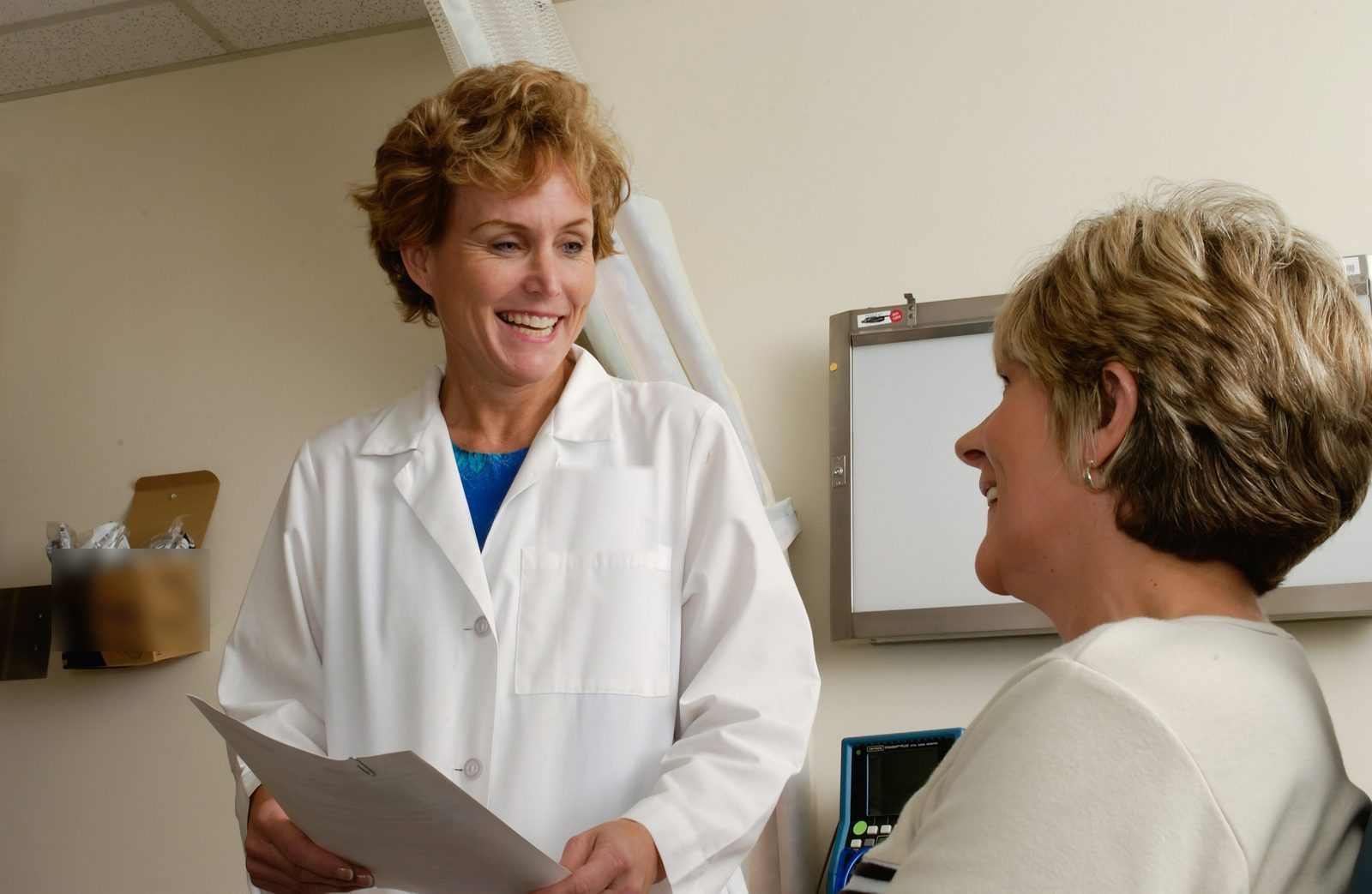
You talk to your patient.
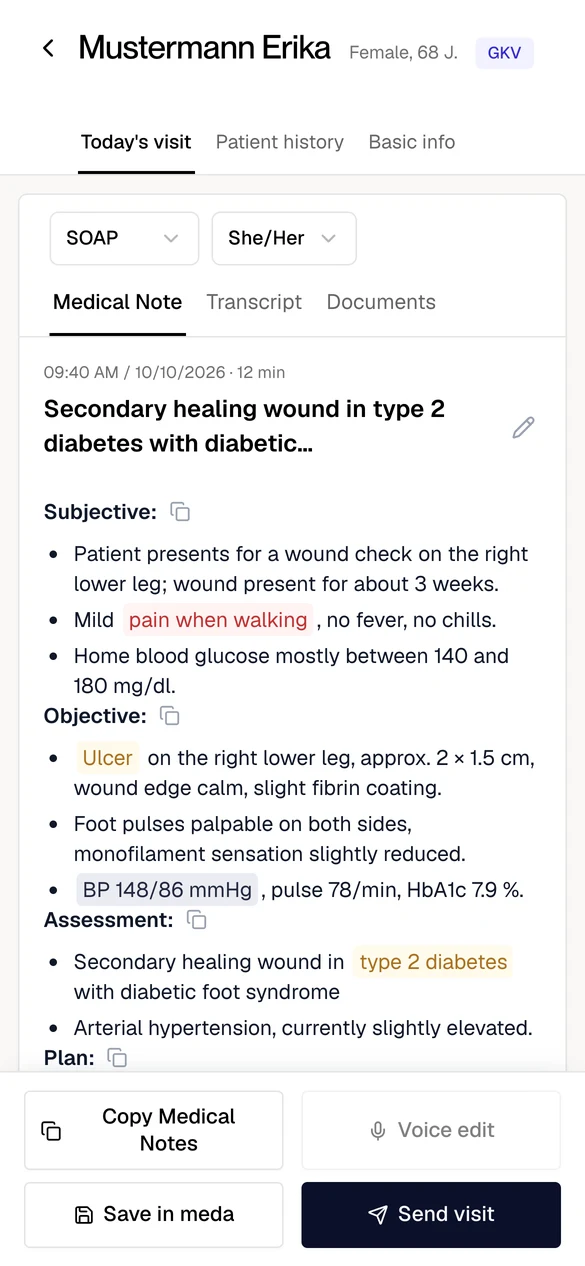
meda writes the note.
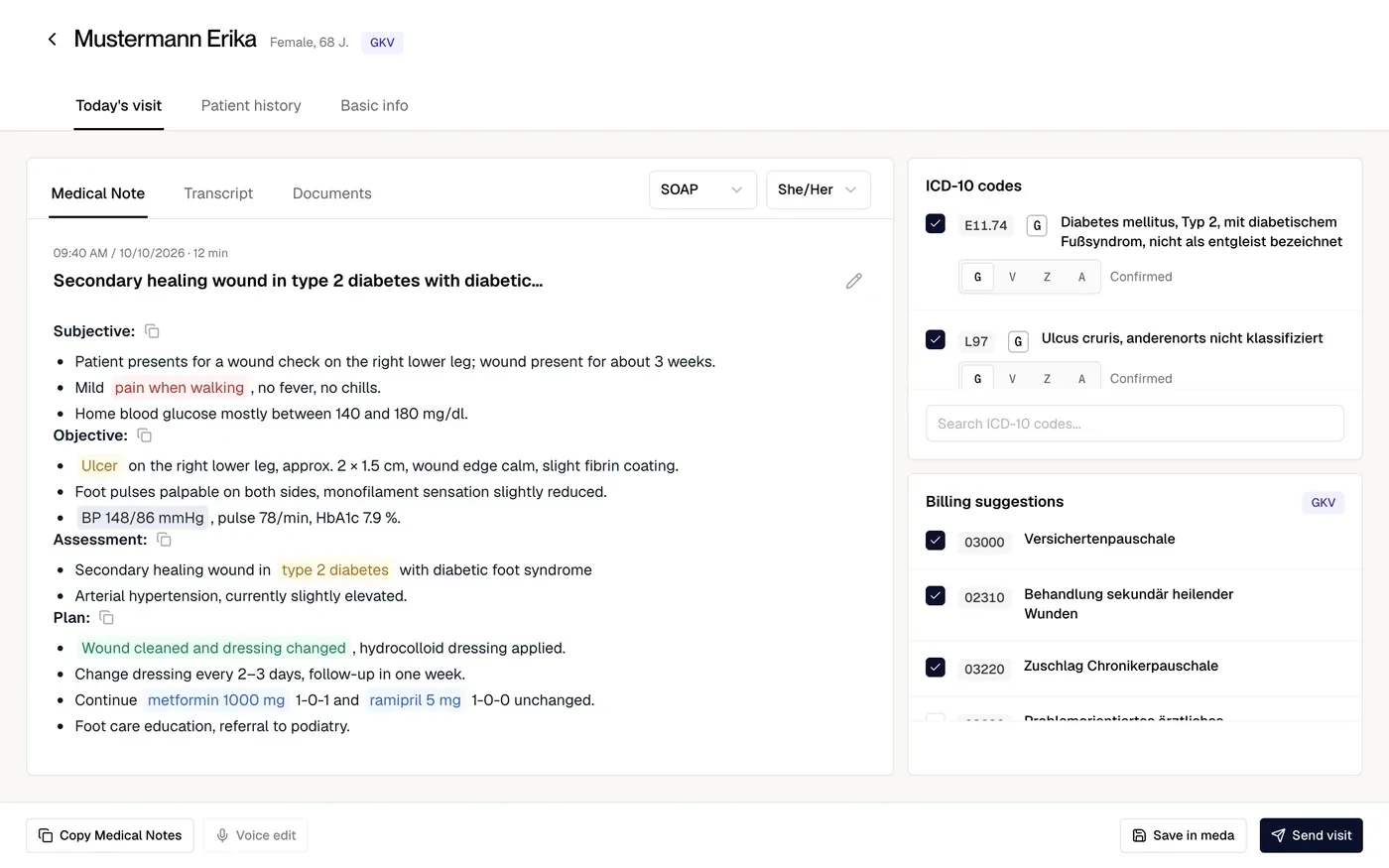
A structured note in German medical language, ready seconds after the consultation. You review it, change anything by keyboard or by voice, and nothing enters your PVS unless you approve it.
Why doctors choose it
A note you can check in seconds.
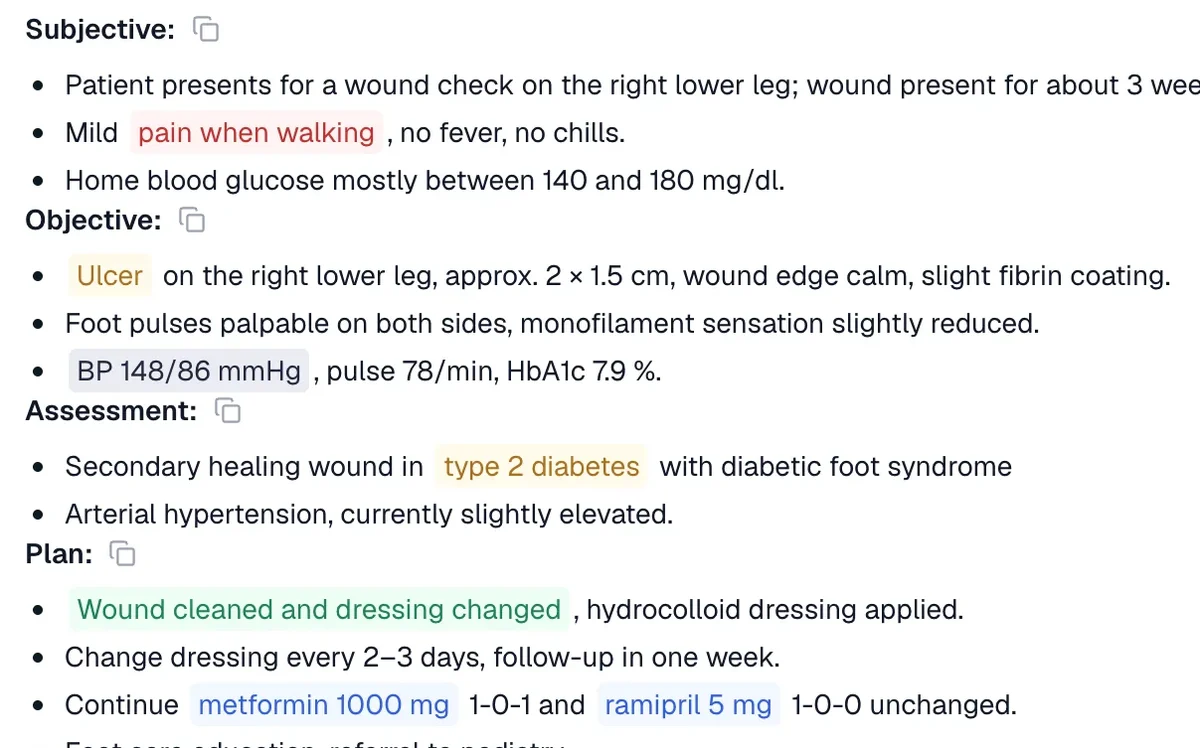
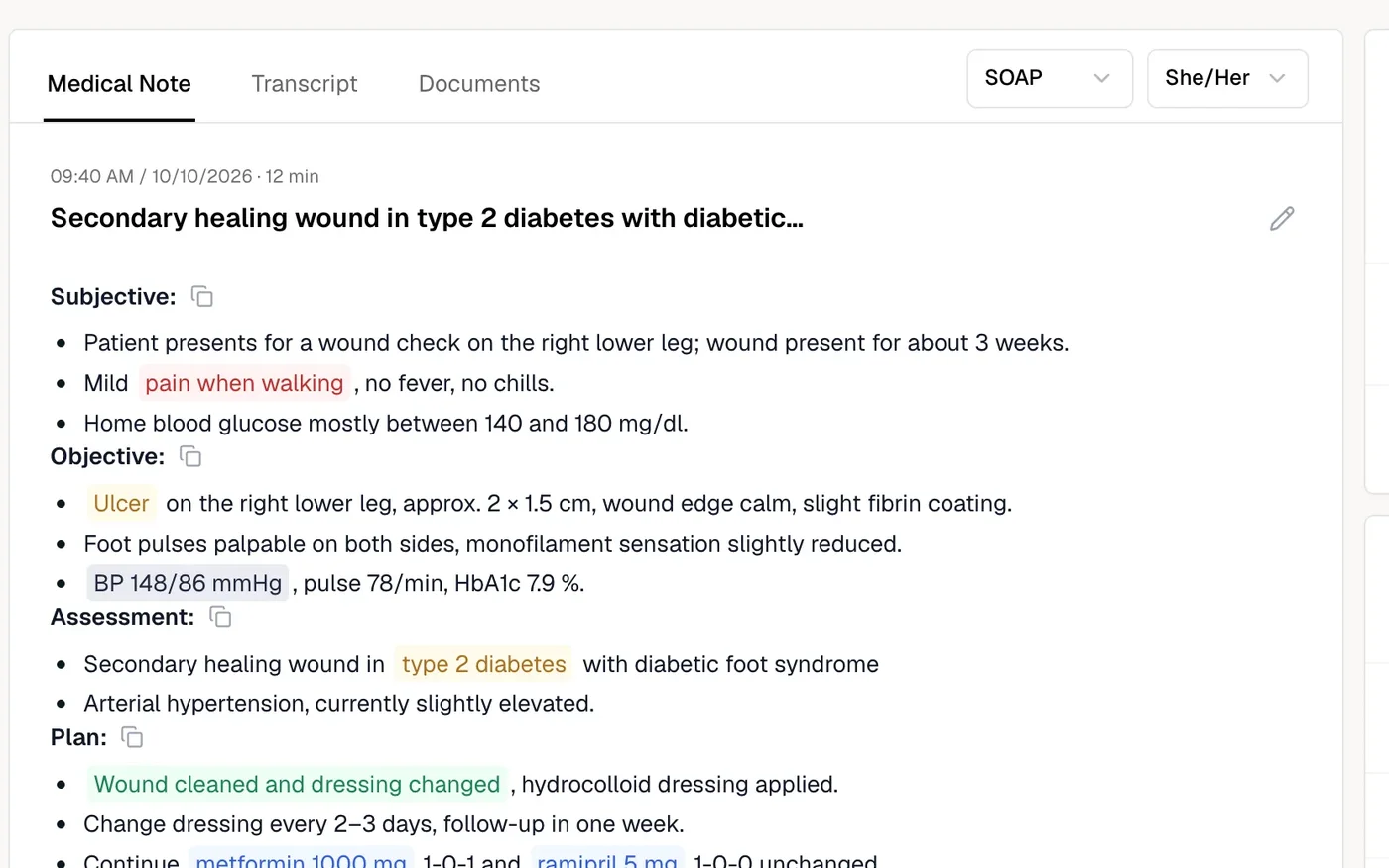
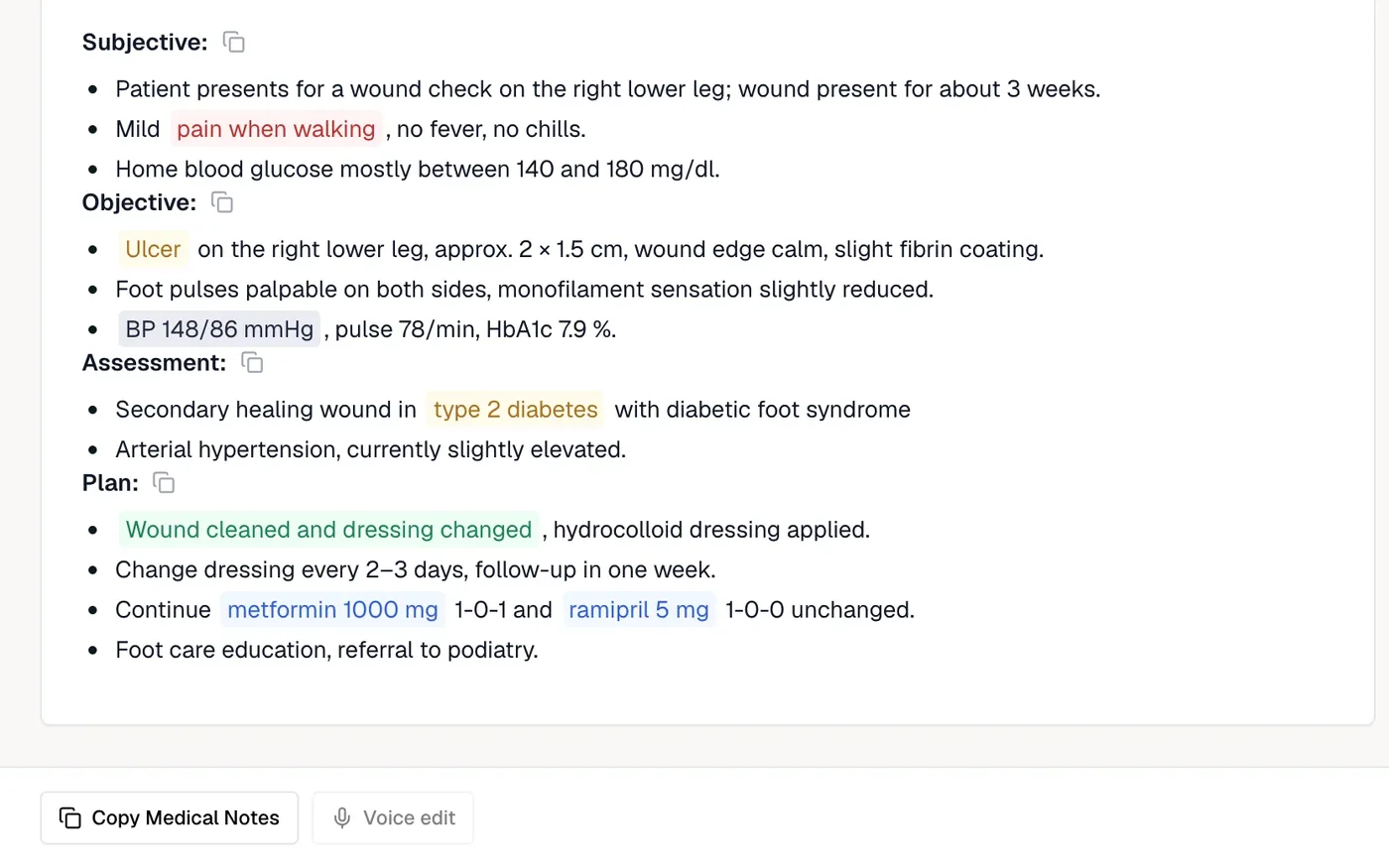
Symptoms, findings, diagnoses, procedures and medication stand out in colour, so you check the note at a glance.
The note is written seconds after you finish talking, not at the end of the day.
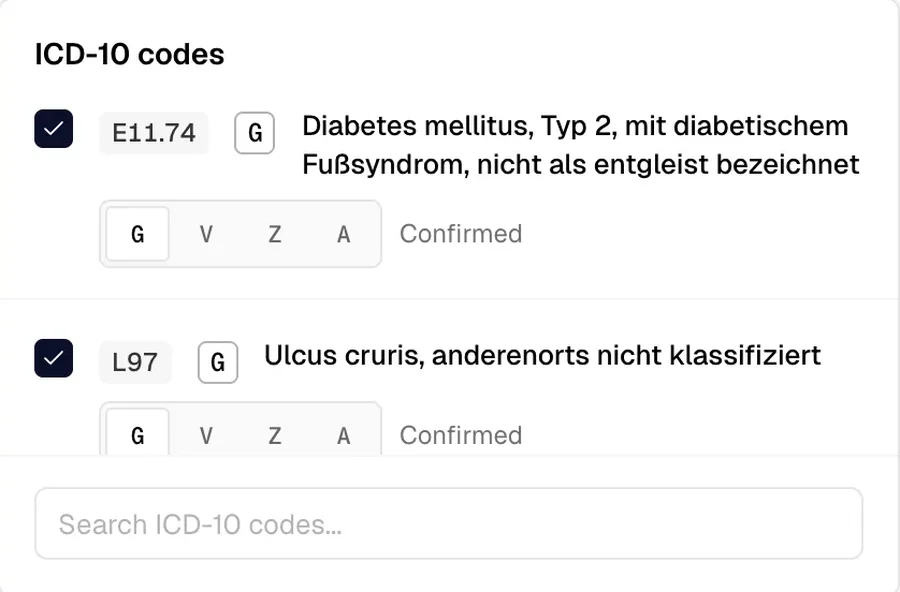
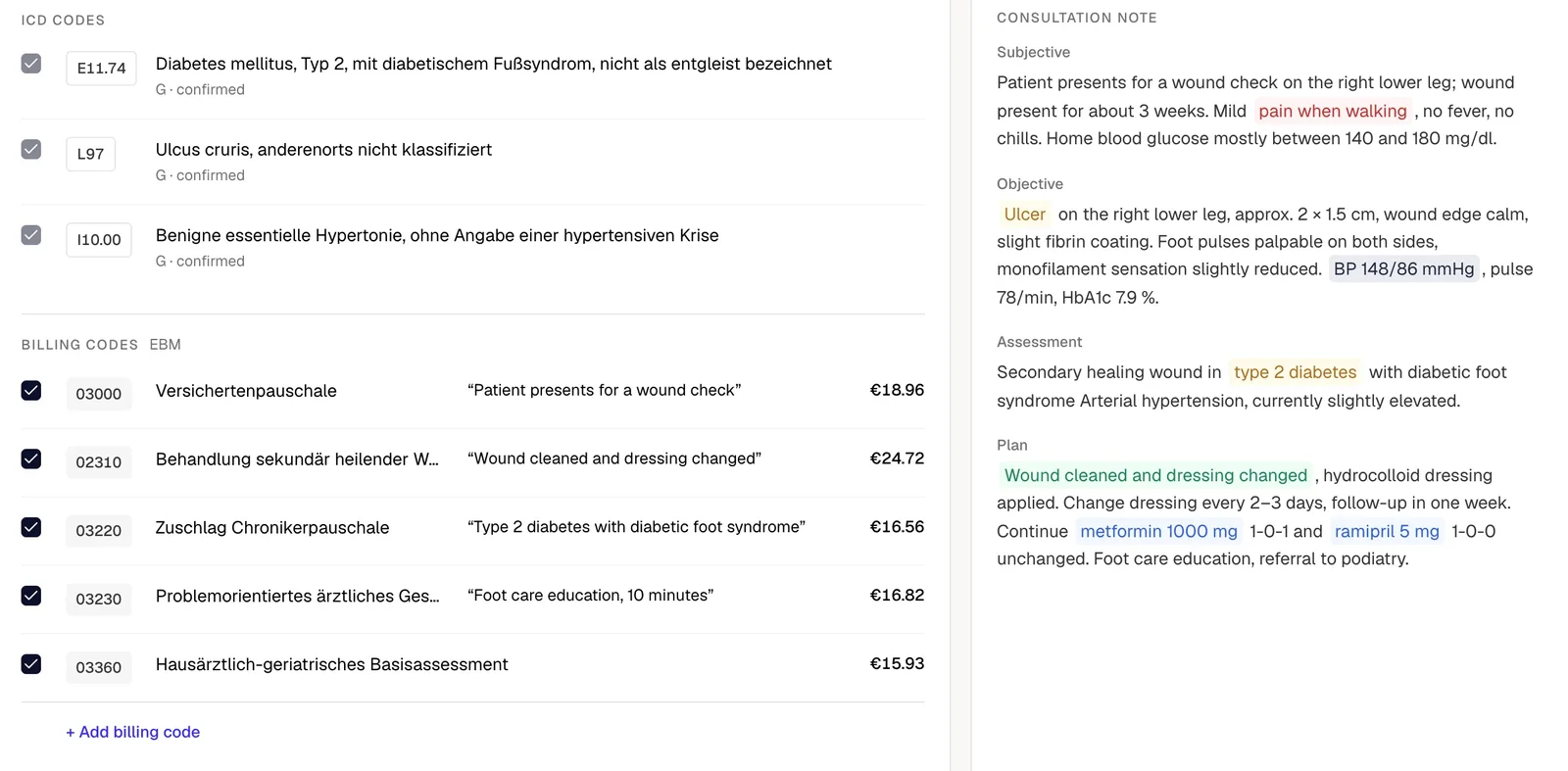
Every diagnosis comes with its code and G, V, Z or A (confirmed, suspected, status post, excluded). You confirm each one.
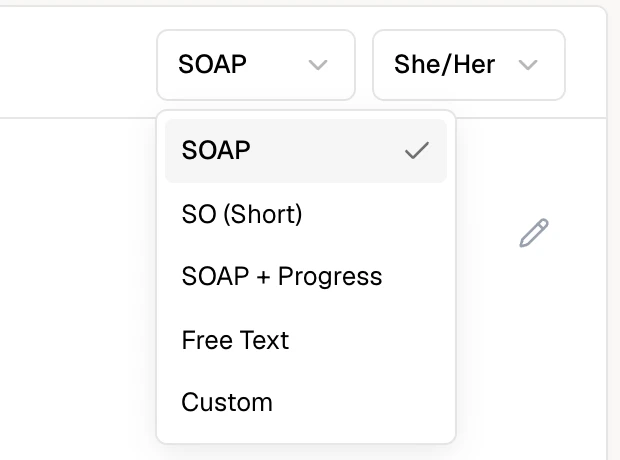
SOAP, SO (Short), SOAP + Progress or Free Text. With a custom template, meda writes the way your practice documents.
Specialties
Notes that speak your specialty.
meda Notes writes in your format and in the terms of your field. For example:
Ulcer on the right lower leg, approx. 2 × 1.5 cm, wound edge calm.
Right knee: extension/flexion 0-10-110°, effusion, tender medial joint line.
Exertional dyspnea NYHA II, EF 45%, no edema.
Cycle regular, screening exam unremarkable.
Both eardrums calm, nasal breathing obstructed on the right.
“The note is almost always right first time, and meda suggests the right ICD codes along with it. That saves me the catch-up work every day.”
Dialects and languages
From Low German to Bavarian, and many languages more.
meda understands your patients’ dialects, and patients who speak Turkish, Arabic or Ukrainian too. The note is always written in German medical language.
German dialects
- Bavarian
- Swabian
- Saxon
- Franconian
- Hessian
- Kölsch
- Berlin German
- Low German
- Palatinate German
- Alemannic
- Thuringian
- Swiss German
- Austrian German
And other languages
- Türkçe
- Русский
- العربية
- Polski
- Українська
- Română
- English
- Kurdî
- فارسی
- Italiano
- Hrvatski
- Български
- Ελληνικά
- Српски
- Shqip
- Tiếng Việt
- 中文
- Español
- Français
- and many more
On the go
Works on your phone too. On home visits, for example.
meda runs on your smartphone as well. Document at the patient’s home, save the note, and approve it back at the practice. Only then does it go into your PVS.
- On the home visitmeda writes it down, on your phone
- SavedThe note waits for you
- Back at the practiceReview, approve, into your PVS
Measured, not promised.
Every number comes with its method and sample, the way we publish our billing measurement.
meda Notes and meda Billing
You document once. The billing follows from it.
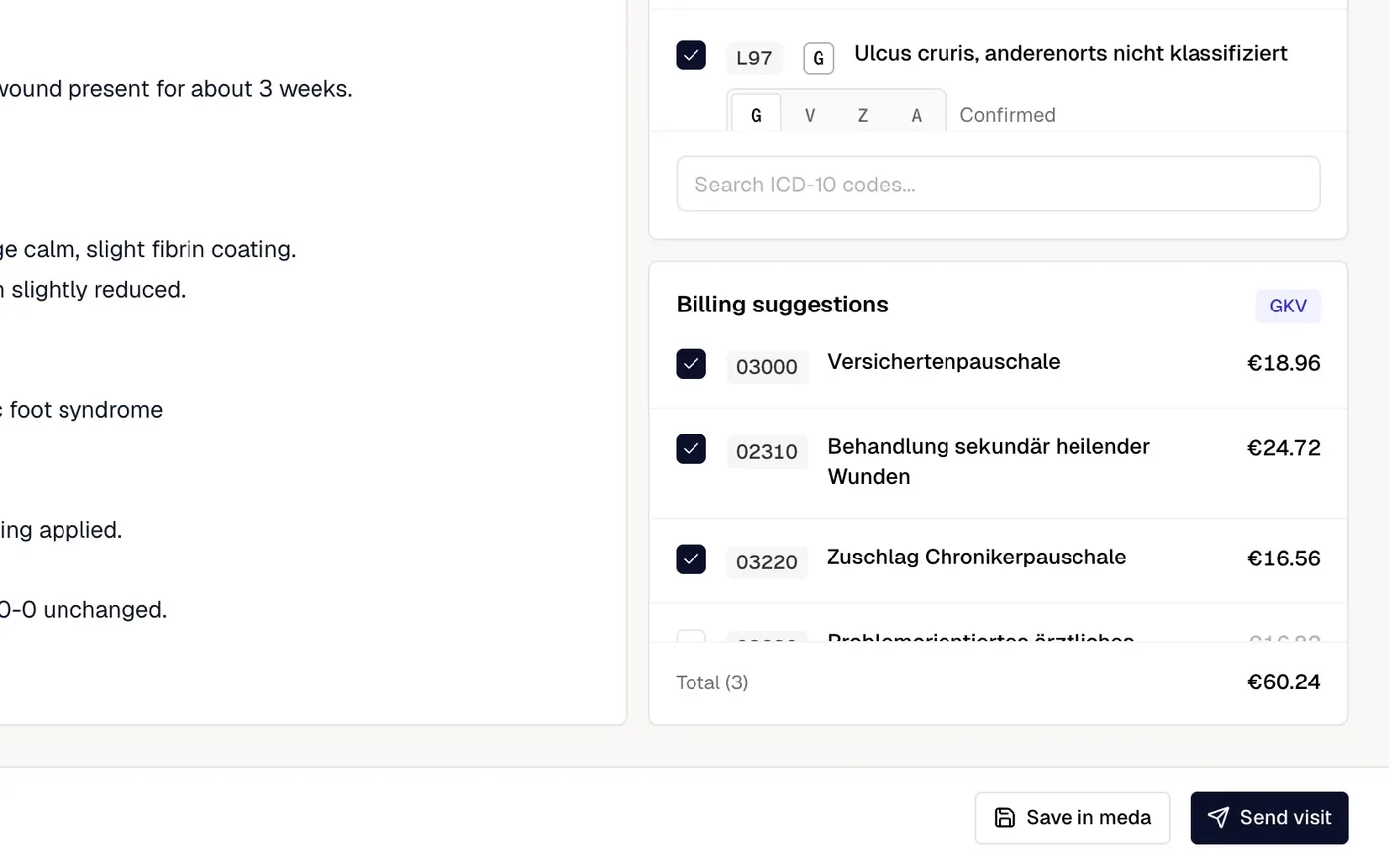
meda Notes stands on its own. Add meda Billing and the same note becomes your billing: meda finds the billing codes the note supports and shows the line behind each one.
- The consultationWith your patient
- The notemeda Notes
- The billing codesmeda Billing
- Your PVSOnly what you approve
Security, in one glance
What holds before any practice data flows.
Deleted after transcription, every time.
meda writes the draft; you decide what goes in.
Signed before any practice data flows.
Our servers are in EU data centres.
Your practice’s data never trains AI models.
Processing under the GDPR, only on your instructions.
meda Notes
For practices with 1–2 sites
69 €
per doctor per month, excl. VAT
- Notes written while you talk
- A summary before every appointment
- ICD‑10‑GM suggested, you confirm
Common questions
Is the audio stored?
No. The audio is deleted once the consultation is written down, every time.
Why doesn’t meda write into my PVS by itself?
Because the note carries your name. meda writes the draft; you review it and approve it. Only then does it go into your PVS.
Does meda understand other languages and dialects?
Yes. Patients speak the way they speak, in another language, in dialect or with an accent, and meda writes the note in German medical language.
Does it work with our PVS?
meda works with any practice software (PVS). You keep the one you have.
Which note formats are there?
SOAP, SO (Short), SOAP + Progress and Free Text. Your practice can also set up its own custom template. You pick the format, and meda writes the note in it.
Is meda a medical device?
No. meda writes a draft for you to review, and you decide what goes into the note and your PVS. More on our regulatory page.
Can our nurses (MFA) use it too?
meda Notes is for the doctors who document. Logins for your nurses (MFA), billing staff and management come free with meda Billing.
What happens to our data?
Our servers are in the EU, audio is never stored, and meda never trains on your data. Your practice signs a Data Processing Agreement (AVV) before the first record. The details are on our security page.
Try meda Notes in your next consultation.
Sign up, start a consultation and read the note. No setup call needed.